
Geometry Dash Lite
Arcade4,3 su 5
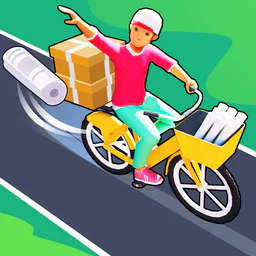
Per Android e iOS · Supercent, Inc.
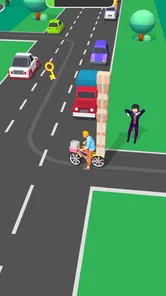
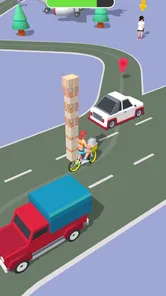
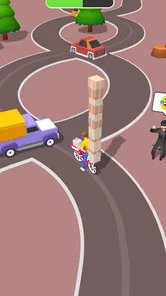
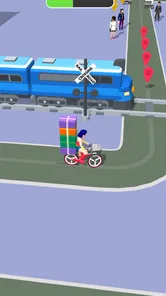
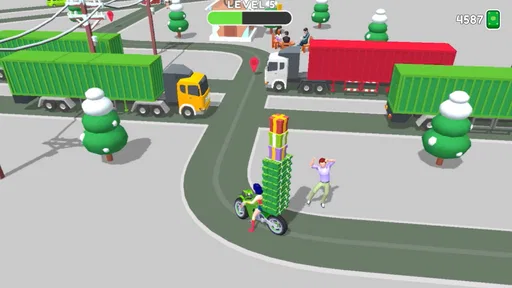
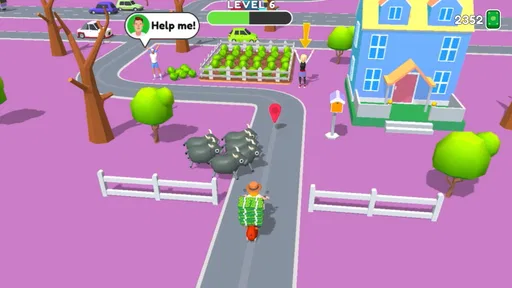
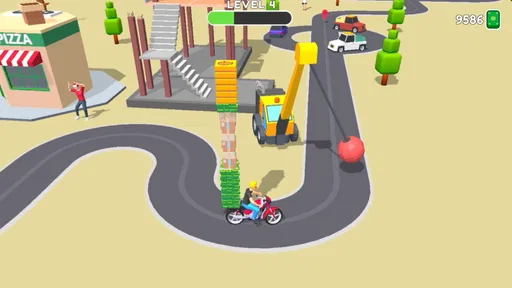
 Analisi di Gamesive
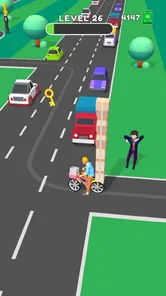
In Paper Delivery Boy, the appeal is easy to grasp: you ride through a neighbourhood making deliveries while trying to steer clear of trouble. I like that this gives the arcade action a small, concrete goal rather than asking me to chase an abstract score from the outset. It suits a brief break, especially when I want something simple to pick up without committing to a long session. The catch is that the premise also sets expectations: if you want a deep cycling simulation, a story-led adventure, or a lot of strategic choice, this is probably not the ride you’re looking for.
Developed by Supercent, Inc., this free arcade game turns bicycle deliveries into a sequence of quick challenges. The basic idea gives each ride a little purpose: make progress through the neighbourhood, handle the route, and avoid hazards. That is a useful distinction from arcade games built around movement alone. Even when the task is straightforward, the delivery framing makes me think about steering and timing as part of getting the job done, not merely staying alive.
The game is PEGI 3, which makes its broad, light premise approachable for younger players as well as adults looking for uncomplicated play. That rating does not automatically mean every person will enjoy the pace or controls, of course; it indicates a suitable age classification, not a promise that the game is equally engaging for every age. I would treat it as casual entertainment rather than a substitute for a more involved game with progression and a larger set of decisions.
It is reasonable to approach it as a pick-up-and-play arcade title, not as a game that needs a long warm-up. Its delivery objective is immediately understandable, so the main learning curve is likely to be getting comfortable with the ride and reacting to hazards. I would start with a few short attempts and focus on how the route feels before trying to rush through it. That helps separate a genuine control issue from the normal adjustment of learning when to steer.
For an everyday use case, imagine waiting for a bus or taking a short break between tasks. A delivery run is a more natural fit than a game that expects you to remember a complex quest or resume a long match. I find this kind of focused arcade loop most satisfying when I can give it a little attention: glance at the route, make deliberate movements, and stop after a run if I need to. Playing while distracted may make near misses feel frustrating rather than fun.
The game has an average rating of 4.2 from around 236 thousand ratings, a substantial audience signal that can help set expectations, though it cannot tell you whether its particular style will suit you. More useful is to ask yourself what you want from an arcade game: if a simple delivery objective and obstacle avoidance sound appealing, the concept is a good match. If you mainly want a wide variety of modes or elaborate mechanics, I would look at other arcade options instead.
The most demanding moments in a game like this are not necessarily long sessions; they are the sections where steering, forward movement, and watching for danger compete for attention. My practical advice is to treat each attempt as a short exercise in reading the path. Reacting early is generally a better habit than waiting until an obstacle is right in front of the bicycle. It is a small adjustment, but it can make a simple arcade route feel more controlled.
There is also a trade-off between speed and precision. Pushing through a stretch quickly may feel satisfying, but it leaves less room to correct a poor line. When a run starts to go wrong, I would avoid making several frantic corrections at once; a calmer adjustment is easier to judge. This is not a hidden trick or a guaranteed way to succeed, just a sensible approach to a game whose central tension comes from riding and avoiding danger.
That focus can be a strength when I have only a minute or two, but it can also limit the game’s appeal during a longer session. A straightforward delivery loop does not offer the same variety as an arcade game built around changing modes or a more complex set of challenges. If you tend to lose interest once you have understood a game’s central rhythm, this may be better as an occasional time-filler than as your main game.
I would judge reliability here in terms of how comfortably the game fits into a casual routine, not on claims about technical performance that cannot be guaranteed across devices. The useful question for a player is whether a short run feels easy to begin and whether a mistake makes you want to try again. With an uncomplicated premise, the stakes of an individual attempt are naturally lower than in a long, carefully built campaign, which makes the format forgiving in spirit even when a run does not go well.
For recovery, I recommend treating a failed delivery as information: notice whether you turned too late, overcorrected, or stopped paying attention to the route, then adjust on the next attempt. That is more helpful than repeating the same rushed movement and hoping for a different result. I would not assume that every mistake is purely down to the player, since controls and device responsiveness can affect how a game feels. If steering seems inconsistent, try another short run when you can give the screen your full attention before deciding that the game is not for you.
Paper Delivery Boy has passed 10 million installs, and its broad reach suggests that the central idea has found an audience. Popularity is not the same as proof of flawless performance, so I would still judge it on your own phone and play style. If you want a dependable experience for a quick break, test it in the same kind of setting where you expect to use it: for example, at home with a few quiet minutes, rather than while walking or juggling other tasks.
The current version is 1.47.0, and the stated minimum operating system is Android 7.0. If your phone meets that requirement, the next sensible step is simply to see how the game feels in practice. I would not infer low battery use, small storage needs, or smooth performance on every compatible device from the game’s simple arcade premise. Those things can vary with the phone, its condition, and what else is running.
For the best first impression, close anything that is making your phone feel sluggish and play a brief session while the device is comfortable to hold. That is practical advice rather than a promise of a particular performance improvement. If the display feels cramped or your touch inputs are hard to control, an otherwise suitable operating system will not make the experience enjoyable. A game focused on navigating a bicycle is only as comfortable as your ability to see the route and respond accurately.
The game is free to download, with in-app purchases listed from €1.09 to €11.99 when billing goes through Google Play. I would decide whether to spend only after trying the basic experience and working out how often you actually return to it. A free starting point makes it easier to judge whether the delivery loop suits you; there is little reason to buy anything just because you are curious about the premise. The purchase range is useful to know beforehand, particularly if a child will be using the device.
Compared with a typical arcade game centred on endless dodging, this one gives movement a delivery purpose. That can make a short run feel more grounded: you are not just swerving for its own sake, but trying to carry out a neighbourhood task while staying out of danger. Compared with racing games, though, the appeal is less about competing for a realistic sense of speed and more about managing a simple route. Compared with a fuller cycling game, it is also a lighter choice, not a detailed simulation of riding.
That makes the audience fairly specific. I would recommend it to someone who enjoys quick obstacle-avoidance games, wants an easy premise to understand, and is happy to replay a focused activity. I would steer a player toward a more varied arcade title if they need frequent changes of pace, and toward a dedicated racing or cycling game if they want more control over the ride or a stronger sense of competition. Neither alternative is universally better; it depends on whether the delivery theme or deeper variety matters more to you.
The game has 97 written reviews alongside its large rating count, so I would not use the number of written opinions alone as a substitute for trying it. What matters most is whether the actual loop is your kind of fun. My useful test would be to play a few short runs: if learning the route and avoiding hazards keeps you engaged, the simplicity is doing its job. If you are already wishing for a broader set of activities, that is a sign to move on rather than expecting the game to transform into something more ambitious.
For me, Paper Delivery Boy works best as a small, accessible arcade diversion. Its delivery premise gives a clear reason to ride, while the need to avoid danger provides the immediate tension. I would keep my expectations focused on that core experience: short bursts, simple goals, and a bit of concentration when the route gets busy. It is not the right pick if you want a deep progression system, a realistic cycling model, or enough variety to occupy every long session.
In performance terms, I would not make a universal promise about speed or stability, because those depend on the device and circumstances. The practical choice is to check that your Android version meets the minimum, give the game a short trial, and decide based on how responsive and comfortable it feels on your own phone. With over 10 million installs and a 4.2 average, it has broad appeal, but those figures should be a starting point rather than a personal verdict.
My recommendation is simple: try it if you like casual arcade games where a clear task and quick reactions matter more than a complicated ruleset. Use short, attentive sessions, especially while learning to steer, and judge any purchase only after you know you want to keep playing. If you prefer richer mechanics or a more varied arcade experience, choose something built around those priorities instead. For the right player, this is an easy game to understand and a pleasant way to fill a spare moment; for everyone else, its straightforward focus may wear thin.
Paper Delivery Boy è un gioco mobile casual in cui si interpreta un ragazzo delle consegne alle prese con il recapito dei giornali. In genere, l’esperienza si basa su controlli semplici e livelli brevi: bisogna seguire il percorso, evitare ostacoli e raggiungere i destinatari. Prima di scaricarlo, tieni presente che il ritmo e le attività disponibili possono variare in base alla versione e agli aggiornamenti del gioco.
La disponibilità gratuita dipende dall’edizione e dallo store del dispositivo. Anche quando il download non ha un costo iniziale, il gioco potrebbe includere annunci pubblicitari o acquisti in-app, per esempio per ottenere contenuti o vantaggi aggiuntivi. Controlla la scheda ufficiale su Google Play o App Store prima dell’installazione: lì trovi il prezzo, le eventuali spese e le informazioni aggiornate sugli acquisti.
Alcuni giochi di consegne casuali permettono di affrontare le attività principali offline, ma non è possibile garantirlo per ogni versione di Paper Delivery Boy. Una connessione potrebbe essere necessaria per scaricare dati, visualizzare annunci, sincronizzare i progressi o accedere a funzioni online. Se vuoi giocare senza rete, verifica la descrizione dello store e prova il gioco dopo aver disattivato la connessione, tenendo conto che certe funzioni potrebbero non essere disponibili.
Il tema delle consegne e le meccaniche immediate possono renderlo accessibile anche a un pubblico giovane, ma l’età consigliata e i contenuti effettivi dipendono dall’edizione specifica. Prima di installarlo, consulta la classificazione per età nello store e controlla se sono presenti pubblicità, acquisti in-app o collegamenti a servizi esterni. Per i bambini, è consigliabile configurare i controlli parentali e proteggere gli acquisti con l’autenticazione del dispositivo.
Puoi cercare Paper Delivery Boy su Google Play per Android o sull’App Store per iPhone e iPad, quindi installarlo solo dalla pagina ufficiale. Prima del download, controlla che il nome dello sviluppatore corrisponda a quello dell’app desiderata, oltre a compatibilità, versione minima del sistema operativo, spazio richiesto e valutazioni recenti. Se il gioco non appare nel tuo store, potrebbe non essere disponibile per il dispositivo o nella tua area geografica.
Su Android, Paper Delivery Boy richiede queste autorizzazioni.
4,2 su 5
235.929 recensioni
Arcade · Supercent, Inc.

Arcade4,6 su 5

Arcade4,5 su 5

Arcade4,1 su 5

Arcade4,7 su 5

Arcade4,4 su 5

Arcade4,2 su 5

Arcade4,4 su 5

Simulazione4,3 su 5

Ruolo3,8 su 5

Ruolo4,4 su 5
Arcade4,3 su 5

Arcade4,4 su 5

Arcade4,3 su 5

Arcade4,3 su 5

Arcade4,4 su 5

Arcade4,6 su 5

Arcade4,6 su 5

Arcade4,2 su 5

Arcade4,5 su 5

Arcade4,4 su 5

Arcade4,3 su 5

Arcade4,1 su 5

Gamesive recensisce i giochi in modo indipendente e non riceve compensi dagli sviluppatori per le valutazioni. Non ospitiamo file di gioco: i pulsanti di download aprono le pagine ufficiali di Google Play e App Store. Nomi, icone e screenshot appartengono ai rispettivi proprietari.